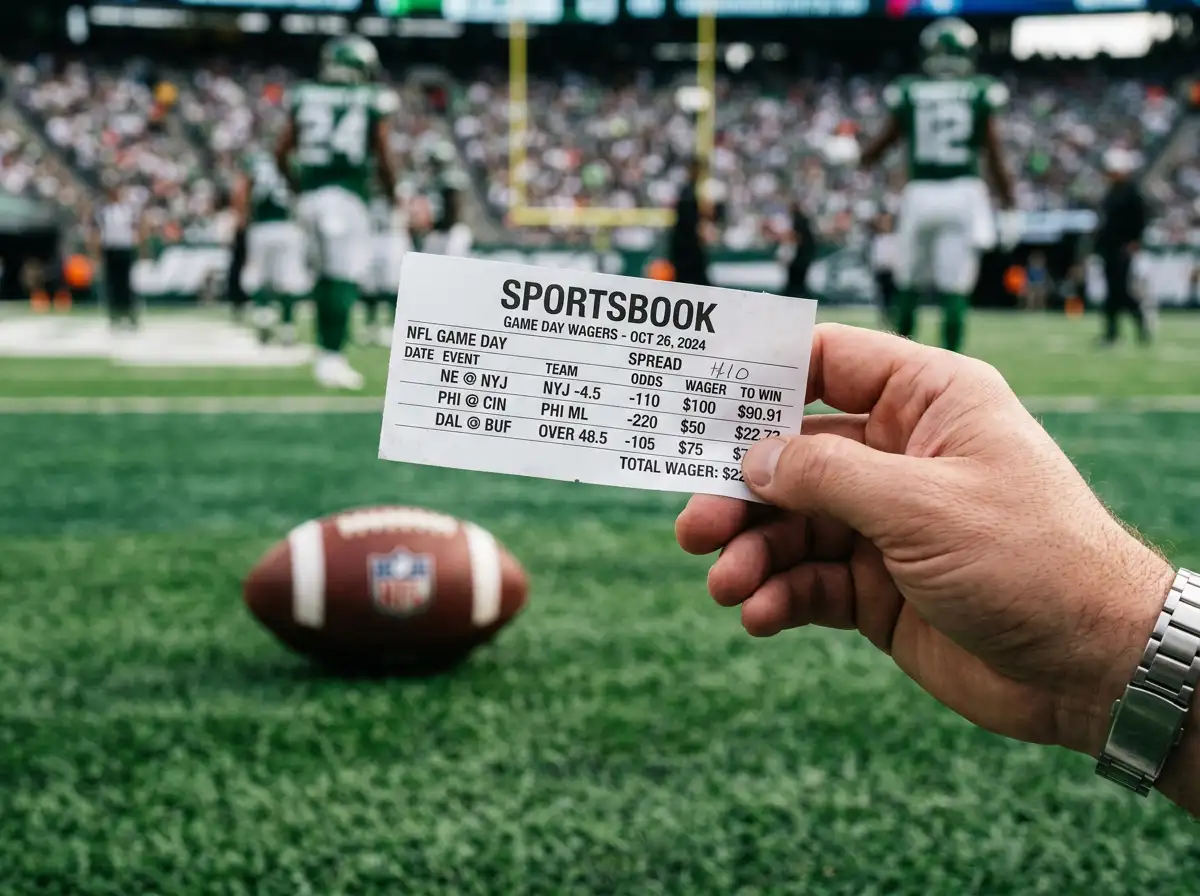
Top NFL Prop Bets: UK Player Markets and Odds Analysis
 Available in US
I placed my first NFL prop bet in 2014 — a quiet Thursday evening, Paddy Power’s app, Patrick Mahomes wasn’t even in college yet. The market was thin, the odds were soft, and almost nobody in the UK was paying attention to American football specials. Twelve years later, the landscape has shifted beyond recognition. The United Kingdom now counts over 13 million NFL fans, roughly 4 million of whom qualify as avid followers. Legal sports wagering on the NFL in the US alone hit $30 billion during the 2025 season, and while precise UK figures for NFL-specific handle remain unpublished, the explosion of prop markets at UKGC-licensed books tells its own story.
Prop bets — short for proposition bets, or “specials” as most UK bookmakers label them — strip the sport down to individual performances and micro-events. Will a quarterback throw for more than 275.5 yards? Will the first touchdown come through the air or on the ground? These markets reward knowledge that goes deeper than picking a winner, and they’re where I’ve spent the vast majority of my analytical energy since the mid-2010s.
This guide is built specifically for UK punters. Not recycled American content with a decimal-odds screenshot bolted on — I mean genuinely constructed around the platforms you use, the kickoff times that suit your schedule, and the regulatory protections that apply in this country. I’ll walk through every major category of NFL prop bet, show you how odds translate between formats, explain where value actually hides, and lay out the market data that most competing guides simply ignore. Whether you’re placing your tenth prop bet or your thousandth, the sections ahead are designed to sharpen your approach with numbers, not noise.
$30B
Legal NFL wagers placed in the US during the 2025 season
13M+
NFL fans in the United Kingdom
35-40%
Share of bookmaker GGR now driven by same-game parlays
9-11%
Average hold rate at major sportsbooks in 2025, up from 6-7% in 2021
Table of Contents
- Key Statistical Metrics for NFL Prop Betting Edge
- What Are NFL Prop Bets?
- Every Type of NFL Prop Bet at a Glance
- How NFL Prop Odds Work for UK Punters
- How to Find Value in NFL Props
- Same-Game Parlays: Opportunity and Risk
- UK Bookmakers With the Deepest NFL Prop Markets
- Why UK Punters Have a Timing Edge
- The NFL Prop Bet Market in Numbers
- Staying in Control: Responsible Betting
- Frequently Asked Questions
Key Statistical Metrics for NFL Prop Betting Edge
- NFL prop bets — “specials” at UK bookmakers — reward specific football knowledge that match betting ignores. Line shopping across multiple UKGC-licensed books is the single highest-impact habit.
- Same-game parlays carry hold rates of 20-30%, compared to 5-7% on straight bets. Treat them as supplements, not strategy.
- UK punters have structural timing advantages: evening kickoffs align with peak research hours, and exchange betting offers lower margins than traditional bookmaker overround.
- The NFL prop market is growing fast — $30 billion in US NFL handle for 2025 alone, with UK fan numbers exceeding 13 million.
- Discipline is the edge multiplier: unit sizing, results tracking, and responsible gambling tools protect everything else.
What Are NFL Prop Bets?
A few years back, a friend who’d been betting on Premier League match results for decades asked me what I actually did with NFL markets. When I said “props,” he looked at me like I’d invented a word. Fair enough — the terminology sounds odd until you realise it’s just short for “proposition,” meaning any wager that doesn’t depend on the final score or match outcome. In UK betting culture, these sit under the “specials” tab, and once you understand the concept, you’ll wonder why you ever limited yourself to match bets.
UK terminology note: What American sportsbooks call “prop bets” or “player props,” most UKGC-licensed bookmakers list as “specials” or “player specials.” The markets are identical — only the label changes. If you’re searching on bet365 or Sky Bet, look for the specials section within any NFL fixture.
A prop bet isolates a single event or performance within a game. Instead of asking “who wins?” it asks questions like “how many passing yards will the quarterback throw for?” or “will there be a successful two-point conversion?” The structure typically takes one of two forms. Over/under props set a statistical line — say, 62.5 rushing yards — and you wager on whether the actual number finishes above or below that mark. Yes/no props present a binary outcome: will a specific player score a touchdown, yes or no? Both formats generate their own odds, which UK books display in decimal format.
Handle — the total amount of money wagered on a market or across a sportsbook. NFL handle in the US reached $30 billion in 2025, giving a sense of the liquidity flowing through these markets.
Hold — the percentage of total handle that the bookmaker retains as profit after paying out winners. The gap between hold on straight bets and hold on parlays is one of the most important numbers in this guide — more on that in the same-game parlay section.
The appeal for analytical bettors is straightforward: prop markets are less efficient than spreads and totals. Major sportsbooks employ entire teams of traders to set point spreads. Prop lines, by contrast, often rely on algorithms with thinner oversight, especially for secondary statistical categories like receptions or kicking points. That inefficiency creates pockets of value — if you know where to look and have the discipline to exploit them consistently.
Bill Miller, the CEO of the American Gaming Association, framed the broader environment neatly when he said that legal sports betting “enhances the fun and friendly competition that make NFL games and traditions even more special.” That’s the entertainment angle. From my side of the desk, the real enhancement is informational: props give you a vehicle to monetise specific football knowledge — defensive scheme analysis, target-share data, weather adjustments — that a simple win/loss market would never reward.
The American football betting market grew from $8.52 billion in 2025 to $9.5 billion in 2026, and projections push that figure toward $14.49 billion by 2030. Props represent an expanding slice of that total, particularly as same-game parlay products bundle individual props into higher-margin packages. Understanding the mechanics of a single prop bet is therefore the foundation for everything else in this guide — from odds conversion to bankroll strategy.
Example: Passing Yards Over/Under
Line: 274.5 passing yards
Over: 1.91 (decimal) | Under: 1.91 (decimal)
A 10 GBP stake on the Over at 1.91 returns 19.10 GBP total (9.10 GBP profit) if the quarterback finishes with 275 or more passing yards.
Every Type of NFL Prop Bet at a Glance
When I first started mapping NFL prop markets, I made a spreadsheet with about fifteen categories. That spreadsheet now has over sixty. The ecosystem has expanded dramatically, but every prop still falls into one of four buckets: player performance, team, game, and novelty. Here’s how they break down — and where the deeper analysis of individual player markets picks up where this overview leaves off.
Player Performance Props
These are the workhorses of the prop market and the category where I spend roughly 80% of my time. Player props set a line on an individual’s statistical output in a single game. The most liquid markets centre on the obvious categories: passing yards, rushing yards, receiving yards, and touchdowns. But the granularity goes much further than that. You’ll find props on completions, attempts, interceptions thrown, longest completion, carries, targets, receptions, and even tackles for defensive players.
Touchdown props deserve special attention because they come in three distinct flavours. Anytime touchdown scorer is the most common — you’re simply backing a player to score at least once. First touchdown scorer carries higher odds because you’re predicting the sequence, not just the occurrence. Last touchdown scorer mirrors the structure but applies to the final score of the game. The pricing between these three varies significantly, and the value angles differ too: a running back who dominates red-zone carries might be correctly priced as an anytime scorer but undervalued as a first scorer if his team scripts early goal-line runs.
Passing and rushing props are where statistical modelling really earns its keep. Quarterbacks’ yardage totals correlate heavily with game script — a team trailing by two scores in the second half will throw more, inflating passing numbers. Running backs facing a top-five run defence might see their carry totals maintained but their yards-per-carry cratered. These aren’t abstract observations; they’re the kind of factors that move lines between Tuesday and Sunday.
Team and Game Props
Team props zoom out from individuals and ask questions about collective output. Total points scored by a single team, total sacks recorded by a defence, total turnovers in a game — these markets exist alongside the more traditional full-game totals. First-half and second-half scoring props add another layer, letting you isolate periods where one team’s offence tends to start slowly or a defence tends to tire.
Game props overlap with traditional betting lines but offer slightly different structures. “Will both teams score in the first quarter?” is a game prop. “Will the total points be odd or even?” is a game prop. “Will there be a safety?” — that’s a game prop too, typically priced at long odds given that safeties occur in roughly 5-6% of NFL games. Margin of victory and “race to X points” markets round out this category.
Novelty and Exotic Props
This is where the Super Bowl gets weird — and where casual bettors tend to overspend. Novelty props include the colour of the Gatorade dumped on the winning coach, the length of the national anthem, the coin toss result, and whether a specific celebrity will be shown on camera. Around 40% of first touchdowns in the Super Bowl historically come from passing plays, which is itself a prop market that straddles the line between performance analysis and novelty betting.
The coin toss prop is a genuine 50/50 market, yet bookmakers still build in overround — meaning you’re paying a premium to bet on what is essentially a coin flip. It’s one of the few prop markets where no amount of research can generate an edge.
Exotic props also include the “Octopus” — a player scoring a touchdown and then converting the subsequent two-point attempt. It’s rare, it’s thrilling, and it’s become a cult favourite among prop enthusiasts on both sides of the Atlantic. The full breakdown of Super Bowl prop markets covers these in detail, including historical hit rates and pricing patterns.
How NFL Prop Odds Work for UK Punters
I once watched a mate copy an American tipster’s pick without realising the quoted odds of -110 didn’t translate to 1.91 in decimal — he’d mentally processed it as “roughly evens” and sized his stake accordingly. It cost him nothing that time, but the confusion was real. If you’re betting NFL props from the UK, odds format literacy isn’t optional — it’s the foundation of every payout calculation, every value assessment, and every bankroll decision you’ll make.
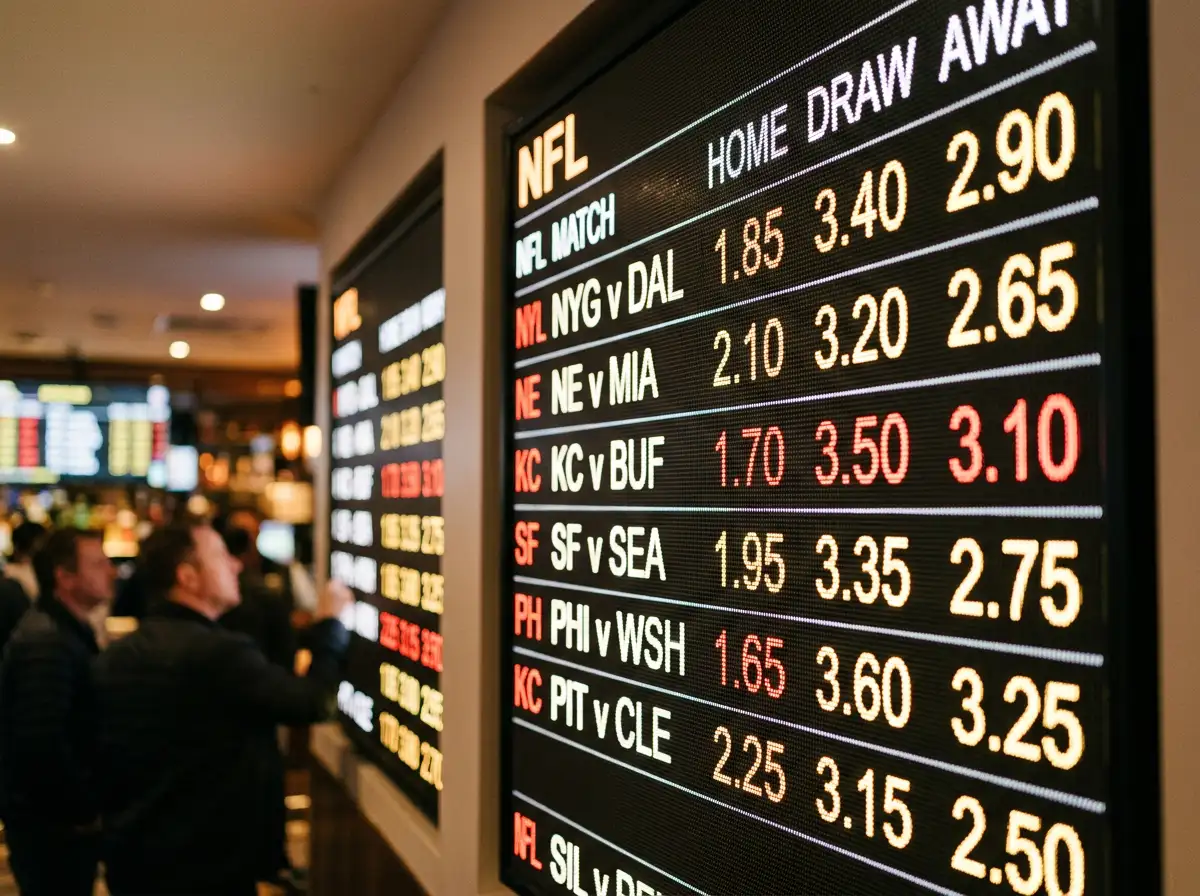
UK bookmakers display NFL prop odds in decimal format. A price of 2.00 means your total return is twice your stake — 10 GBP wagered returns 20 GBP, for a profit of 10 GBP. A price of 1.50 returns 15 GBP on a 10 GBP stake. The beauty of decimal odds is that the maths is always multiplication: stake times odds equals total return. No messing around with fractional numerators and denominators, no need to calculate separate profit and return figures.
American odds, which you’ll encounter constantly on US-based research sites, use a different system entirely. Negative numbers (like -110) indicate how much you’d need to wager to win 100 units. Positive numbers (like +250) indicate how much you’d win on a 100-unit wager. Converting between the two formats is essential if you’re sourcing analysis from American platforms. The global sports betting market is valued at $112.26 billion, and Europe holds the largest regional share at approximately 44% — so while American formats dominate the conversation online, you’re actually operating from the world’s biggest betting region.
Converting American Odds to Decimal
Negative American odds (e.g., -150): Divide 100 by the absolute value, then add 1. So -150 becomes (100 / 150) + 1 = 1.67 decimal.
Positive American odds (e.g., +200): Divide the number by 100, then add 1. So +200 becomes (200 / 100) + 1 = 3.00 decimal.
Quick check: -110 = (100 / 110) + 1 = 1.91 decimal. This is the standard “vig line” on most US props, equivalent to what you’d see priced around 1.90-1.95 at UK books.
UK Decimal Format
Displayed as: 1.91, 2.50, 3.75
Calculation: Stake x Odds = Total Return
Implied probability: 1 / Odds x 100
Used by: bet365, Sky Bet, Paddy Power, Betfair, William Hill
US American Format
Displayed as: -110, +150, +275
Calculation: Varies for positive and negative lines
Implied probability: Different formulas for + and –
Used by: DraftKings, FanDuel, Caesars, BetMGM

Implied probability — the percentage chance of an outcome that the odds suggest, before accounting for the bookmaker’s margin. At decimal odds of 2.00, the implied probability is 50%. At 1.50, it’s 66.7%.
Overround — the total implied probability across all outcomes in a market. A fair market sums to 100%; bookmakers build in overround (typically 105-115% on props) to ensure a profit margin regardless of the result.
Here’s where it gets practical. The overround on NFL prop markets at UK books tends to run higher than on match betting or point spread markets. I’ve tracked this across multiple seasons: a standard two-way prop (over/under on passing yards, for instance) typically carries an overround of 108-112%, compared to 104-106% on a match handicap. That means the bookmaker’s built-in edge is larger on props, which makes finding genuine value more demanding — but also more rewarding when you succeed, because recreational bettors flood these markets with uninformed money.
One advantage UK punters have that often goes unmentioned: exchange betting. Platforms like Betfair allow you to both back and lay NFL props, effectively letting you act as the bookmaker on the other side of someone’s bet. The exchange commission (typically 2-5%) is often lower than the overround baked into a traditional bookmaker’s prop line. It’s a structural edge that simply doesn’t exist for most American bettors, and it’s one I’ll return to in the bookmaker comparison section.
How to Find Value in NFL Props
Three seasons ago, I tracked every NFL receptions prop where a specific modelling tool identified an edge above a certain threshold. Over 93 bets, the return was 6.6% profit. Not life-changing money on a per-bet basis, but across a full season at consistent stakes, it compounds into something meaningful. The point isn’t that 6.6% is guaranteed — it’s that systematic value identification works when you stick to a process instead of chasing hunches.
The average hold rate at major sportsbooks has climbed from 6-7% in 2021 to 9-11% in 2025. That increase is driven almost entirely by parlay products, but it also means that straight prop bets now exist in a market where bookmakers are extracting more from the betting public overall. Your job, as someone who wants to be on the right side of that equation, is to find the gaps they can’t price perfectly. The complete strategy breakdown covers this in granular detail, but here are the pillars.
Line Shopping Across UK Books
Matt, the editor-in-chief at SportsBettingDime, put it simply: line shopping is “arguably the most important strategy when betting NFL player props.” I agree, and I’d remove the “arguably.” Different bookmakers set different lines for the same prop. One might post a quarterback’s passing yards at 269.5, while another lists 274.5 on the same player in the same game. That five-yard difference might not sound dramatic, but it changes your win probability by several percentage points — which, across hundreds of bets, is the difference between a profitable season and a losing one.
UK punters have access to multiple UKGC-licensed books, each with independent pricing teams for NFL props. Opening accounts at three or four is standard practice for anyone serious about value identification. The effort isn’t in placing the bet; it’s in checking the lines before you commit.
Matchup Metrics That Matter
Key metrics for prop research: EPA (Expected Points Added) measures the value of each play relative to the game situation. DVOA (Defence-adjusted Value Over Average) compares a player or unit’s efficiency against the league baseline. Target share tracks the percentage of a team’s passing targets directed at a specific receiver. These three metrics, used together, give you a far more reliable projection than raw yardage averages.
Matchup analysis is where most casual bettors stop at “good player versus bad defence” and call it a day. That’s not analysis — it’s narrative. Genuine matchup work means asking specific questions. Is the opposing defence playing predominantly zone or man coverage? Zone inflates underneath reception totals for slot receivers. Man coverage creates more variance in deep targets. A running back facing a defence that ranks in the bottom five by EPA against the run might see elevated yardage, but only if his offensive line’s run-blocking grade supports the expectation.
I check these numbers every Tuesday when lines first appear. By Thursday, the sharper bettors have already moved the most mispriced lines. By Sunday morning, the window is usually closed. Timing isn’t separate from matchup analysis — it’s integral to it.
Do
- Compare lines across at least three UK bookmakers before placing any prop bet
- Check target share and red-zone usage rates for touchdown props
- Factor in game script: teams expected to trail will pass more
- Track your results over a minimum of 100 bets before drawing conclusions
Don’t
- Rely on season-long averages without adjusting for opponent strength
- Chase a losing day by adding more prop bets to “make it back”
- Ignore the weather report for outdoor games, especially wind above 15 mph
- Assume a player’s previous week performance predicts next week’s output

Pre-Bet Checklist: Before Placing Any NFL Prop
- Confirm the player is active and not on the injury report as questionable or doubtful
- Check the line at a minimum of three different bookmakers
- Review the opponent’s defensive ranking in the relevant statistical category
- Consider the game script: is the team favoured or expected to trail?
- Check the weather forecast for outdoor venues
- Verify your stake is within your pre-set unit size — no exceptions
Same-Game Parlays: Opportunity and Risk
Same-game parlays — or “bet builders” in the language UK bookmakers prefer — are the fastest-growing product in sports betting, and that growth has very little to do with being good for bettors. SGPs now account for 35-40% of gross gaming revenue at major operators, up from under 20% in 2021. That trajectory tells you everything about who benefits most from the product’s popularity.
The hold rate reality: On traditional straight bets, bookmakers retain approximately 5-7% of the money wagered. On parlays and same-game parlays, that figure jumps to 20-30% or more. In New Jersey, parlays made up 32% of total handle but generated 65% of sportsbook revenue over a twelve-month period. The product is engineered to extract more from each pound you stake.
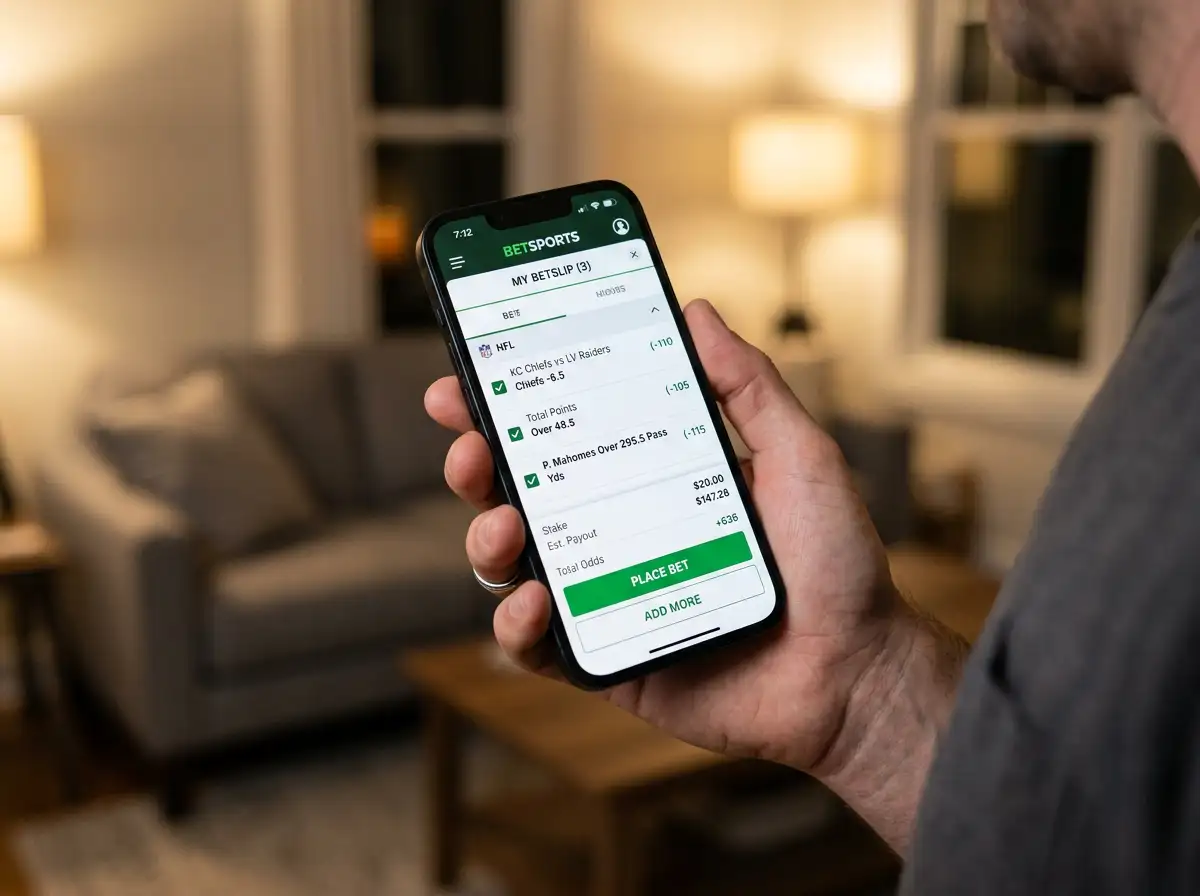
Katherine Sayre, a Wall Street Journal reporter who covers the industry, observed that Americans “have really taken to this kind of sports betting that, as it turns out, is really profitable for gambling companies.” The UK market is no different — bet builders are promoted heavily across every UKGC-licensed app, complete with boosted odds and social-media marketing.
The Wall Street Journal ran its own experiment: 209 same-game parlay bets at $1 each. They won 8 — a 3.8% hit rate — and lost $114 of the $209 wagered. That’s a 54.5% loss rate on total capital, far worse than what you’d expect from straight bets over the same sample. The experiment was small, but the direction was unambiguous.
None of this means SGPs are inherently worthless. It means you need to understand the mathematics before you engage. Correlation is the key concept: when you combine a quarterback’s passing yards over with his team’s total points over, those outcomes are positively correlated — one happening makes the other more likely. Bookmakers price this correlation into the parlay, reducing the payout below what you’d get if the legs were truly independent. The question is whether they price it accurately, and in my experience, they often overprice the correlation on less obvious combinations while underpricing it on the most popular ones.
In Illinois, bettors wager over $380 million on parlays every month. During football season, that figure climbs to $500 million — in a single state.
If you’re going to use bet builders, treat them as an occasional supplement to your straight prop betting, not as the core of your strategy. The full SGP analysis walks through correlation traps, hold rate calculations, and the specific scenarios where a same-game parlay genuinely offers value rather than just entertainment.
UK Bookmakers With the Deepest NFL Prop Markets
Not all bookmakers treat NFL props with the same seriousness. Some offer a handful of touchdown scorer markets and call it a day. Others build out full statistical props — passing yards, rushing attempts, receptions, kicking points — with competitive pricing and early-week availability. After more than a decade of using UK platforms for NFL betting, I’ve developed a clear sense of which features matter and which are marketing noise.
The first thing to check is market depth. A bookmaker that lists 15 player prop markets per NFL game is fundamentally more useful than one listing five. Depth matters because it gives you more angles to exploit and more opportunities to find mispriced lines. The second factor is line availability timing — do props appear on Tuesday when the opening lines are softest, or not until Friday when sharp money has already moved them? Third is the quality of the bet builder tool, since most UK bettors will eventually want to combine props within a single game.
The major UKGC-licensed operators — bet365, Sky Bet, Paddy Power, Betfair, and William Hill — all offer NFL prop markets during the season, but their strengths diverge. Some excel at early-week pricing. Others integrate with broadcast coverage, making props available alongside Sky Sports’ NFL programming. Exchange platforms like Betfair offer something fundamentally different: the ability to lay a prop, effectively betting against an outcome, which functions as a tool for hedging and trading.
UKGC licensing matters. Every bookmaker operating legally in the UK holds a licence from the UK Gambling Commission. The Remote Casino, Betting and Bingo sector generated GBP 7.8 billion in gross gambling yield in the year ending March 2025 — a 13.1% increase year on year. Major operators maintain an average of 13.5 million active accounts monthly. These aren’t niche platforms; they’re heavily regulated, well-capitalised businesses required to provide responsible gambling tools, transparent odds, and fair dispute resolution.
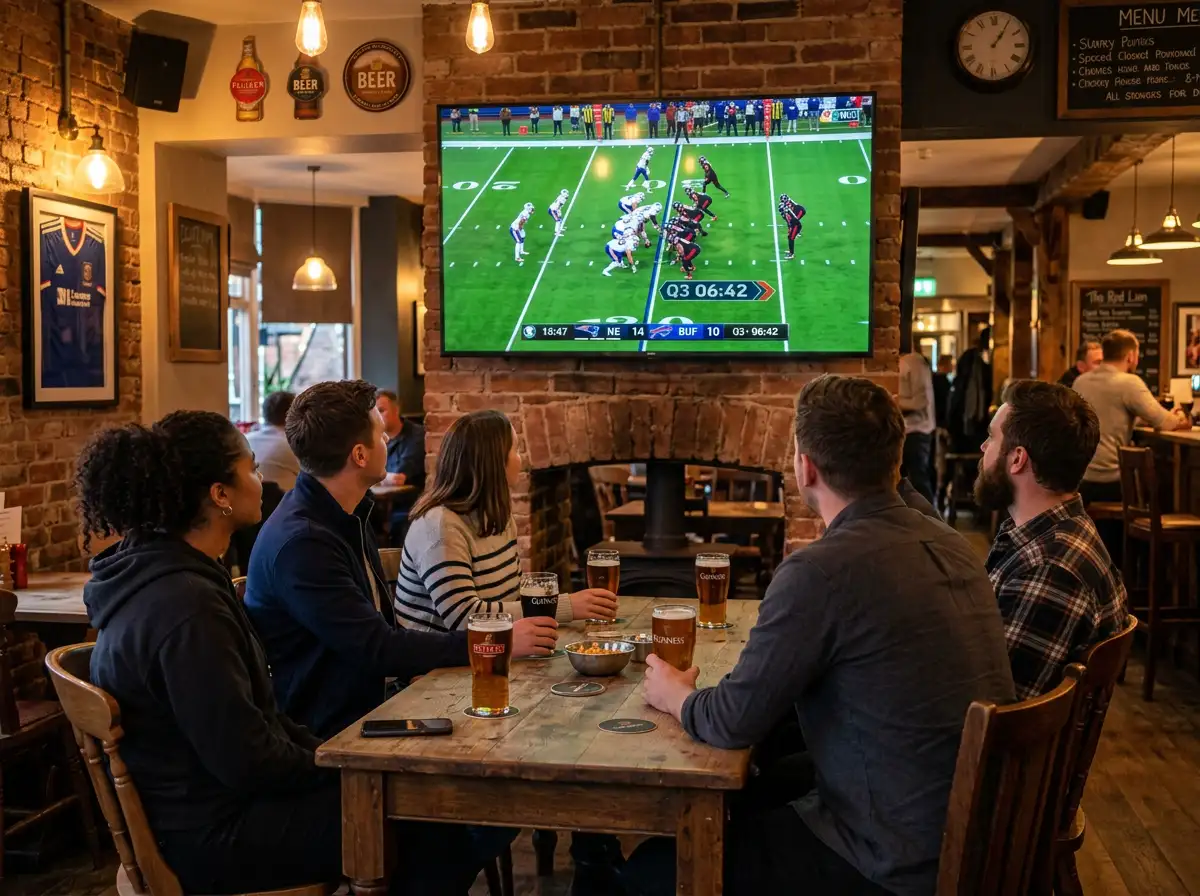
Henry Hodgson, the NFL’s General Manager for UK and Ireland, has described the UK as “a pioneer for the NFL’s global growth ambitions.” That growth is reflected in how UK bookmakers have expanded their NFL offerings. Five years ago, finding a receiving yards prop at a UK book required patience. Now it’s standard, with many operators also listing defensive props, kicking props, and game-specific specials that would have been exclusive to US sportsbooks just a few seasons ago.
Sky Bet’s integration with Sky Sports’ NFL broadcasts deserves particular mention. UK TV viewership of NFL has doubled over the past decade, and Sky Sports’ ratings growth has been significant. If you’re watching a game and want to place a prop bet on what you’re seeing, the overlap between broadcast and betting platform creates a seamless experience that most US bettors — split across different apps and providers — don’t have.
For a more detailed comparison of what each UK bookmaker offers for NFL props, including early-line availability, bet builder functionality, and exchange betting opportunities, the dedicated guide breaks down platform-by-platform specifics. The key takeaway at this level: open accounts at multiple books. Loyalty to a single platform costs you money every single week through missed line value.
Why UK Punters Have a Timing Edge
Most NFL games kick off at 6pm or 9:25pm UK time on Sundays. Monday Night Football starts at half past midnight, and Thursday Night Football typically begins around 1:15am. These hours frustrate UK fans who want to watch live — but for prop betting, the schedule is quietly advantageous.
Sunday afternoon games in the US translate to Sunday evening in Britain. That means you have your entire day free to review injury reports, check final practice participation, monitor weather updates, and compare lines across bookmakers. American bettors who work standard office hours are often placing last-minute props during their lunch break or between meetings. You, meanwhile, have had hours of undisturbed research time before the first whistle.
More than 6 million viewers watched the 2025 NFL London Games on TV or online — a record for international NFL broadcasts. Those games kick off at 2:30pm UK time, landing squarely in the weekend afternoon window when UK betting activity peaks.
The London Games themselves amplify this advantage further. When the NFL plays at Wembley or Tottenham Hotspur Stadium, UK bookmakers roll out expanded prop markets because demand surges locally. The London fixtures act as a gateway: casual fans who tune in for the spectacle discover prop betting through the enhanced coverage and in-app promotions that bookmakers run during these events.
There’s also a structural timing edge with line movement. NFL prop lines typically open on Tuesday in the US. By the time UK punters are settling into their Wednesday morning, the sharpest initial moves have already happened — but the secondary adjustments, driven by injury reports released Wednesday through Friday, create fresh opportunities. I’ve found some of my best value on Wednesday evenings UK time, after the first full practice injury report drops but before the US betting public reacts in volume on Thursday.
The late-window Sunday games (9:25pm UK kickoff) and Sunday Night Football (1:20am Monday) offer another angle: by these kickoff times, you’ve already seen how the early games unfolded. If a heavily-backed player in the early slate underperformed, recreational bettors sometimes over-correct by piling onto similar props in the late games. That herd behaviour occasionally creates contrarian value for those of us still awake and paying attention.
The NFL Prop Bet Market in Numbers
I spend a lot of time telling people that “the numbers say” before I cite a stat. Here’s the section where I lay out the numbers themselves — the market-level data that most prop betting guides completely ignore. Knowing the size and shape of the market you’re operating in isn’t just intellectual curiosity; it tells you about liquidity, competition, and where the industry is heading.
$9.5B
American football betting market size in 2026, growing at 11.5% CAGR
$166.94B
Total legal US sports wagers in 2025, up 11% year on year
$16.96B
Record US sportsbook revenue in 2025
GBP 7.8B
UK Remote Casino, Betting and Bingo GGY, April 2024 to March 2025
The American football betting market reached $9.5 billion in 2026, up from $8.52 billion the previous year, with projections pointing toward $14.49 billion by 2030. Total legal sports wagers across all sports in the US hit $166.94 billion in 2025, generating $16.96 billion in sportsbook revenue — both records. The NFL is the single largest driver of that volume, with $30 billion wagered on the 2025 season alone.
Globally, the sports betting market stands at $112.26 billion and is projected to reach $325.71 billion by 2035. Europe accounts for approximately 44% of the global total, making it the largest regional market by share. Within Europe, the UK’s betting segment was valued at $5.61 billion in 2024, growing at a CAGR of 6.2% through 2030.
What these figures reveal is that NFL prop betting sits at the intersection of two massive, growing markets: American football wagering (concentrated in the US but expanding internationally) and UK sports betting (the world’s most mature regulated market). The UK represents roughly 3% of global NFL search traffic — more than Germany and trailing only Mexico and Canada among non-US countries. That search interest translates directly into betting activity at UK bookmakers.
The revenue mechanics matter too. Bill Miller of the AGA has described the industry’s results as reflecting “strong consumer confidence in a state-regulated market as a safe and trusted form of entertainment.” From the UK side, the Gambling Commission’s data shows online gross gambling yield grew 7% in the January-March 2025 quarter alone, reaching GBP 1.45 billion. Betting and gaming tax receipts for the provisional 2025-2026 fiscal year (April-August) totalled GBP 1,786 million — a 9% increase year on year. The money flowing through these markets is substantial, and it’s growing.
The numbers establish the arena. What follows is the part that keeps you in the game long enough to benefit from it.
Staying in Control: Responsible Betting
I’ve watched sharp bettors blow up their bankrolls not because their analysis was wrong, but because they couldn’t stop after a bad Sunday. Prop betting is absorbing — the volume of markets, the constant stream of data, the temptation to “just add one more leg” — and that absorption makes it easier to lose sight of the line between disciplined wagering and chasing losses.
The UK regulatory framework offers tools that most American bettors simply don’t have access to. Every UKGC-licensed bookmaker is required to provide deposit limits, session time reminders, cooling-off periods, and self-exclusion options. GAMSTOP, the national self-exclusion scheme, allows you to block yourself from all licensed online gambling operators simultaneously for a minimum of six months. These aren’t buried in settings menus — regulators mandate that they’re accessible and clearly signposted.
Know the numbers: 48% of UK adults participated in some form of gambling in the July-October 2025 survey period. Between 8% and 10% of adults placed a sports bet online via an app in the preceding four weeks. These are participation rates, not problem-gambling rates, but they illustrate how normalised betting is in UK culture — which makes personal boundaries all the more important.
Bill Miller of the AGA has emphasised the importance of “strong consumer protections and a shared commitment to responsibility” in legal sports betting markets. That’s the institutional view, and it aligns with what I’d tell any reader of this guide: set your limits before the season starts, not after a losing week. Decide on a unit size — typically 1-2% of your total bankroll per bet — and don’t deviate. Treat props as a form of entertainment with analytical depth, not as income.
If you feel that your betting is becoming difficult to control, the National Gambling Helpline (0808 8020 133) provides free, confidential support 24 hours a day. GamCare and GAMSTOP offer additional resources for anyone who wants to set limits or take a break from gambling.
The data and strategies in this guide are designed to improve your decision-making, not to encourage you to bet more. Every edge I’ve discussed — line shopping, matchup analysis, timing advantages — works only within the framework of disciplined, controlled wagering. Without that framework, the edge is irrelevant.
Frequently Asked Questions
What are NFL prop bets and how do they work?
NFL prop bets — listed as “specials” at most UK bookmakers — are wagers on specific events or performances within a game, rather than the final result. They typically take two forms: over/under lines on statistical outputs (like a quarterback’s passing yards set at 274.5) and yes/no markets on binary outcomes (like whether a player will score a touchdown). You select your position, place your stake, and the bet settles based on the actual in-game result. Props cover everything from individual player stats to team-level events to novelty outcomes like the Super Bowl coin toss.
What types of NFL prop bets can I place in the UK?
UK bookmakers offer four main categories. Player performance props cover passing yards, rushing yards, receiving yards, touchdowns, receptions, and more. Team props include total points scored by a single team, total sacks, and first-half scoring. Game props address full-game events like total points, safeties, or whether both teams score in a given quarter. Novelty props, most common during the Super Bowl, range from Gatorade colour to national anthem length. Market depth varies between bookmakers — some list over 50 prop markets per fixture, others far fewer.
How do I find value in NFL prop bets?
Value identification starts with line shopping — comparing the same prop across multiple bookmakers to find the best price. Beyond that, matchup analysis using metrics like EPA, DVOA, and target share helps you build more accurate projections than the bookmaker’s line implies. Game script matters: teams expected to trail will throw more, inflating passing props. Weather, injury reports, and defensive scheme analysis all feed into the process. The key is systematic repetition over dozens or hundreds of bets, not one-off hunches.
What is a same-game parlay and how does it relate to props?
A same-game parlay (called a “bet builder” at most UK books) combines multiple prop bets from a single game into one wager. All legs must win for the parlay to pay out, and the combined odds are higher than any individual leg. The catch is that bookmakers price in correlation between legs — if you combine a quarterback’s passing yards over with his team’s total points over, those outcomes are related, and the book adjusts the payout downward to reflect that. SGPs carry significantly higher hold rates than straight bets, making them more profitable for the bookmaker and riskier for the bettor.
Which UK bookmakers offer the best NFL prop markets?
The major UKGC-licensed operators — bet365, Sky Bet, Paddy Power, Betfair, and William Hill — all carry NFL prop markets during the season. Market depth, pricing, and early-week availability vary between them. Betfair’s exchange offers the unique ability to lay props (bet against an outcome), which is unavailable to most US bettors. Sky Bet integrates with Sky Sports’ NFL broadcasting. The best approach is to hold accounts at multiple books and compare lines before placing each bet — loyalty to a single platform consistently costs value.
What are the most popular NFL prop bets for the Super Bowl?
The Super Bowl generates more prop markets than any other single game. Player performance props (MVP, passing yards, rushing yards) dominate serious betting volume. Touchdown scorer props — anytime, first, and last — attract heavy action, with around 40% of Super Bowl first touchdowns historically coming from passing plays. Novelty props like the coin toss, Gatorade colour on the winning coach, and national anthem length draw casual bettors. Line inflation is a real concern during the Super Bowl: the two-week gap between the Conference Championships and the game itself allows markets to be moved by public money, often away from fair value.
How do NFL prop bet odds differ between UK and US sportsbooks?
The most visible difference is format: UK books use decimal odds (e.g., 1.91), while US books use American odds (e.g., -110). The underlying mathematics are identical — both represent the same implied probability — but you need to convert between formats if you’re using American-sourced research or tipster picks. Beyond format, UK punters have access to exchange betting through platforms like Betfair, which allows you to both back and lay props at commission rates that are often lower than the overround built into traditional bookmaker lines. Market depth on NFL props tends to be slightly shallower at UK books than at major US operators, though this gap has narrowed considerably in recent seasons.
Created by the ”top nfl Prop Bets” editorial team.