NFL Prop Bets and Predictive Markets: Event Contract Odds
 Available in US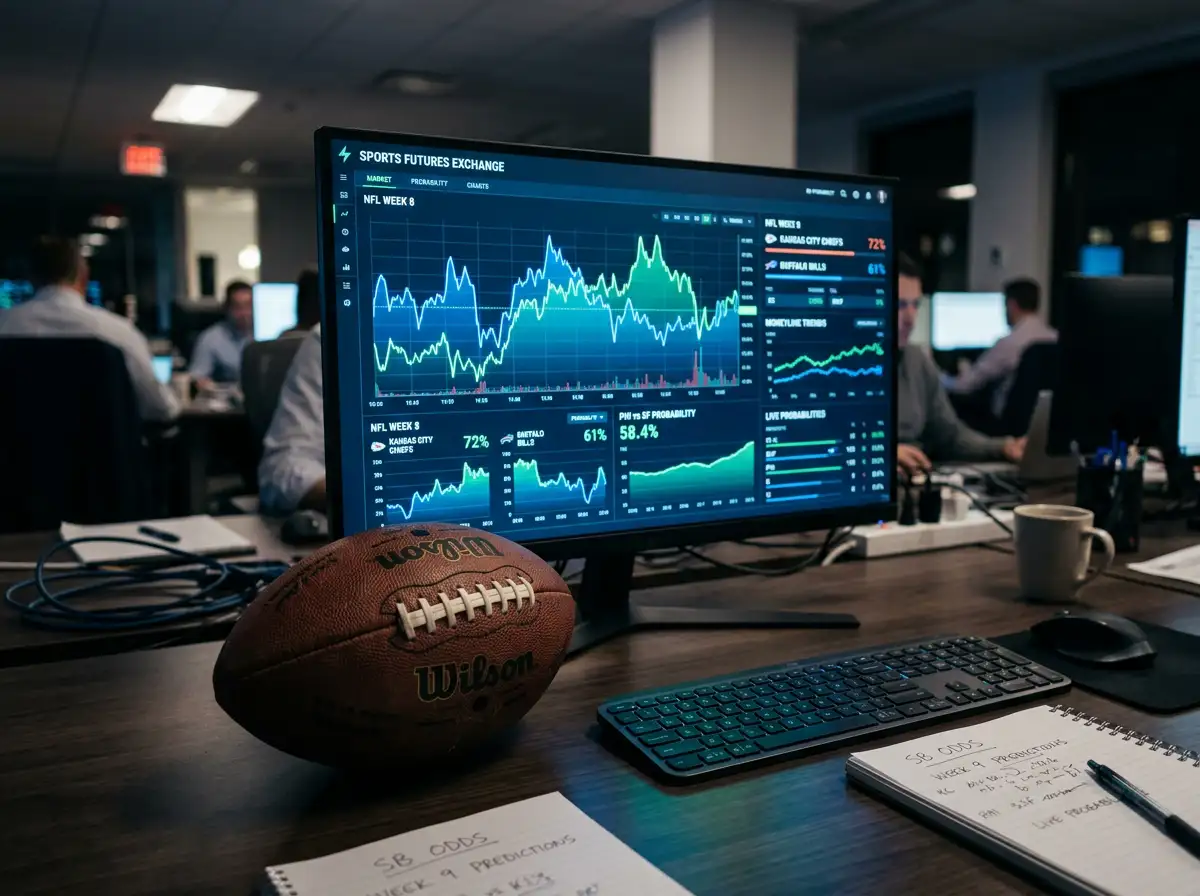
A few years ago, I noticed something odd. I could bet on whether a quarterback would throw over 275.5 yards at my bookmaker, but I could also buy an “event contract” on a different platform that paid out if the same quarterback exceeded that same number. Same underlying event, same binary outcome, completely different regulatory framework. One was called a bet. The other was called a financial instrument. And the people running both products were arguing furiously about which label was correct.
The collision between predictive markets and sports betting is one of the most consequential developments in the gambling industry, and it has direct implications for how NFL prop bets are priced, regulated, and accessed. Tarek Mansour, CEO of prediction market platform Kalshi, has described the long-term vision frankly: “financialise everything and create a tradable asset out of any difference in opinion.” Here’s what that vision means for prop bettors on both sides of the Atlantic.
Predictive Event Contracts vs Traditional Sportsbook Props
At their core, predictive markets and prop bets do the same thing: they let people stake money on the outcome of future events. The structural differences are regulatory and mechanical, not conceptual.
A prop bet is placed with a bookmaker or on an exchange. The bookmaker sets odds, accepts the wager, and pays out based on the result. The transaction is governed by gambling legislation – in the UK, by the UKGC under the Gambling Act 2005; in the US, by individual state gambling commissions.
A predictive market contract is structured as a financial product. You buy a contract that pays a fixed amount (typically $1 or 100 units) if the specified outcome occurs, and pays nothing if it doesn’t. The price you pay for the contract reflects the market’s implied probability. If a “Mahomes Over 275.5 Passing Yards” contract trades at $0.55, the market implies a 55% probability. The transaction is governed by financial regulation – in the US, by the Commodity Futures Trading Commission (CFTC).
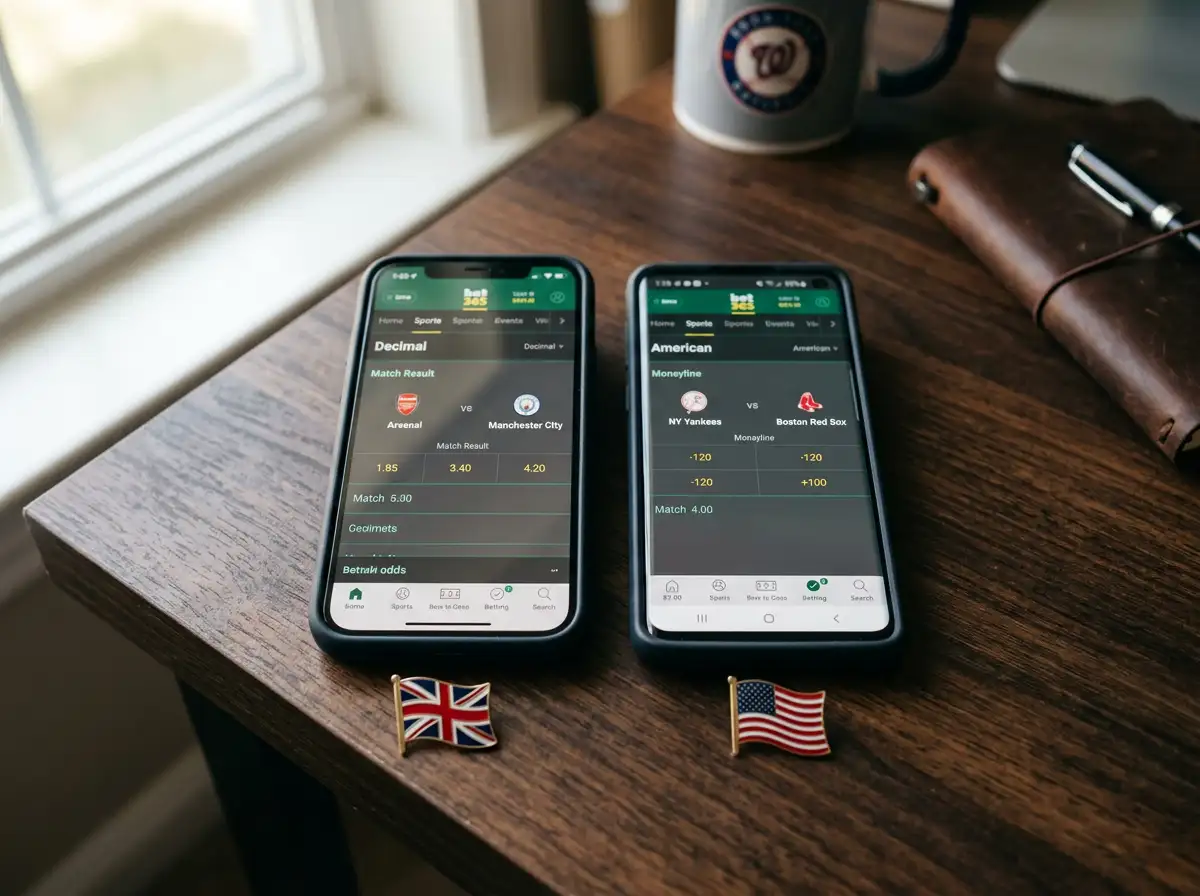
The functional experience for the end user is nearly identical. You’re staking money on whether a quarterback throws for more than 275 yards. The price you pay encodes a probability. If you’re right, you profit. If you’re wrong, you lose your stake. The difference is which government agency oversees the transaction and which set of consumer protection rules applies.
The CFTC and NFL Regulatory Clash
The regulatory battle over predictive markets and sports is fierce, and it’s far from resolved. Chris Christie, former New Jersey governor and strategic adviser to the American Gaming Association, has been blunt about the situation: platforms offering sports-related event contracts are, in his view, offering sports gambling in violation of the laws of all 50 states.
The NFL itself has weighed in through its executive vice president Jeff Miller, who testified to the US House Committee on Agriculture expressing concern that “several sports-related futures contracts have been launched nationwide, including in jurisdictions where sports betting has not been legalized.” The league’s position is clear: if it looks like a sports bet and pays like a sports bet, it should be regulated like a sports bet – regardless of what the platform calls it.
The counter-argument from prediction market platforms is that event contracts are financial instruments, not wagers. They argue that their products serve a price-discovery function – aggregating dispersed information into a single probability – and that this function has legitimate value beyond gambling. The debate has played out in CFTC hearings, federal courts, and Congressional committees, with no definitive resolution as of 2026.
For the prop betting market specifically, the regulatory clash matters because it affects pricing and competition. If prediction market platforms are allowed to offer NFL-related contracts without obtaining state gambling licences, they compete with licensed sportsbooks on the same underlying events but with different (potentially lighter) regulatory burdens. The AGA estimates that $674 billion is already wagered annually on illegal and unregulated platforms in the US, and prediction markets operating in a regulatory grey zone could add to that figure.
What This Means for UK Punters
UK punters exist in a fundamentally different regulatory environment, and that’s an advantage in this context. The UKGC’s framework draws a clear line: if you’re offering a product where customers stake money on the outcome of an event, it’s gambling, and it requires a licence. The semantic debate about “bets” versus “contracts” that consumes US regulatory bandwidth doesn’t apply in the UK, because the legislation is drafted around the activity rather than the label.
The UK’s online gambling market generated approximately £7.8 billion in gross gambling yield in the year to March 2025, all within a regulated framework that provides consumer protections – deposit limits, self-exclusion, dispute resolution – that prediction market platforms in the US are not required to offer. As a UK punter, every platform you use for NFL prop betting is held to these standards.
That said, the prediction market phenomenon does affect UK punters indirectly. The analytical tools and probability models developed by prediction market participants are increasingly influencing how NFL props are priced globally. Sharp bettors who arbitrage between prediction markets and traditional sportsbooks create price pressure that tightens lines at UK bookmakers. The flow of information is global even when the regulatory frameworks are local.
One practical implication: prediction market prices can serve as a useful reference point for your own prop analysis. If a prediction market implies a 58% probability that a running back exceeds 75.5 rushing yards, and your UK bookmaker’s odds imply 52%, the gap suggests potential value on the over – assuming the prediction market’s crowd-sourced probability is well-calibrated. I don’t use prediction market prices as a primary tool, but I check them as a sanity test on my own estimates, particularly for high-profile games where the prediction market liquidity is sufficient to produce meaningful prices.
The convergence of betting and financial markets is a trend that will reshape how prop bets are structured and regulated across the UK and US over the coming years. For now, UK punters have the advantage of operating within a clear, mature regulatory framework while drawing analytical insights from both traditional sportsbooks and the emerging prediction market ecosystem.
Can UK punters use predictive market platforms like Kalshi for NFL bets?
Kalshi is a US-based platform regulated by the CFTC and is primarily designed for US customers. UK punters may face access restrictions depending on the platform’s terms of service and the UKGC’s position on event contracts. For most UK punters, UKGC-licensed bookmakers and betting exchanges remain the regulated and accessible options for NFL prop betting.
How do predictive market contracts differ from traditional prop bets?
The underlying mechanic is similar – both involve staking money on a binary outcome. The key differences are regulatory (prediction markets are overseen by financial regulators like the CFTC, while prop bets fall under gambling commissions) and structural (prediction markets use fixed-payout contracts priced between 0 and 1, while prop bets use odds formats). The consumer protection frameworks also differ, with gambling regulations typically offering more robust safeguards for individual bettors.
Published by the top nfl Prop Bets team.