NFL Prop Bets and Fantasy Football: Statistical Model Overlap
 Available in US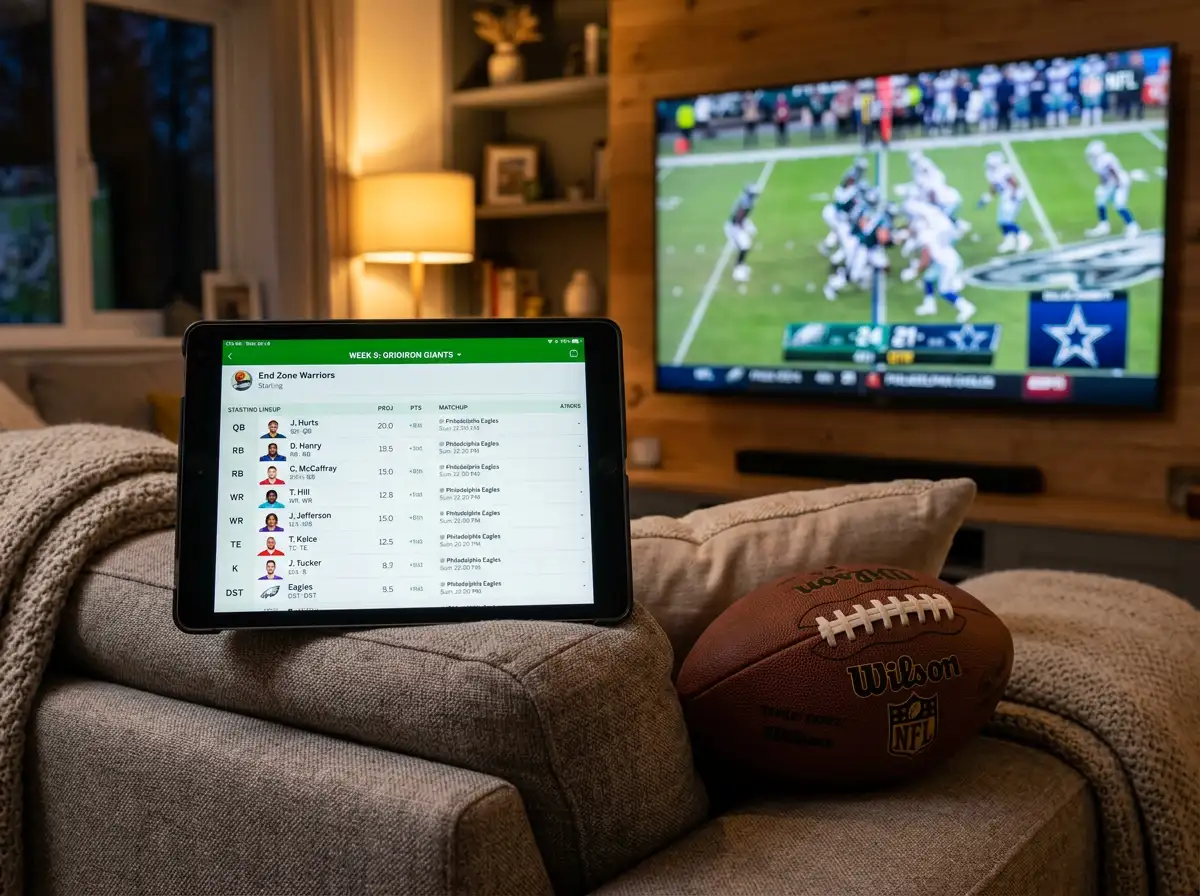
I played fantasy football for six years before I placed my first prop bet, and the transition was smoother than I expected. The weekly research I was already doing – checking injury reports, studying matchups, evaluating snap counts – turned out to be the exact same research that feeds prop betting analysis. The difference was that in fantasy, I was optimising a lineup to outscore other managers. In prop betting, I was trying to outsmart a bookmaker’s line. Same data, different application, and the overlap is more useful than either community typically acknowledges.
With over 13 million NFL fans in the UK, and fantasy football participation growing alongside that fanbase, there’s a large population of punters who already have the analytical habits needed for prop betting but haven’t made the connection. Here’s where the two disciplines converge, where they diverge, and how to use your fantasy knowledge as a prop betting advantage.
Utilising Fantasy Football Projections for Prop Betting
Fantasy football and prop betting draw from the same well of data. Target share, snap count percentage, red zone opportunity rate, air yards, rushing attempts, and defensive matchup grades – these metrics are fundamental to both disciplines. If you’re already tracking a wide receiver’s target share trend over the past four weeks for your fantasy lineup, you’re also generating the exact information needed to evaluate his receiving yards prop.
Projection models in fantasy football produce expected point totals for each player, which are themselves composites of expected passing yards, rushing yards, receptions, and touchdowns. Those component projections map directly to prop bet lines. If your fantasy projection model estimates that a running back will rush for 82 yards, and the bookmaker’s prop line is set at 68.5, you have a 13.5-yard gap that’s worth investigating. Is the bookmaker underrating the matchup? Is your model overweighting recent performance? The analytical dialogue between the two numbers is the same process you’d follow if you’d come to the prop from a pure betting background.
The data sources overlap almost completely. Pro Football Reference, Fantasy Pros, Football Outsiders, and NFL Next Gen Stats are staples for both fantasy managers and prop bettors. The difference is how you use the data. Fantasy managers rank players relative to each other – is Player A better than Player B this week? Prop bettors evaluate a player against a fixed number – will Player A exceed or fall short of 72.5 yards? That shift from relative to absolute analysis is the key mental adjustment.
When Fantasy Research Spots Prop Value
Fantasy research identifies prop value most effectively in three specific scenarios, and all three are situations where the fantasy community’s collective attention generates information before the prop market fully absorbs it.
First, waiver wire darlings. Every week in fantasy leagues, a previously unowned player emerges as a hot waiver pickup – a backup running back who just became the starter, a wide receiver whose role expanded after a teammate’s injury. The fantasy community identifies these players within hours of the triggering event, and the buzz drives waiver activity immediately. Prop lines on these players, however, adjust more slowly. The bookmaker needs to see sustained evidence before significantly moving a line, and the 24-48 hour gap between fantasy community consensus and prop line adjustment is a value window.
Second, game script projections. Fantasy analysis obsesses over game script because it determines who gets volume. A team that’s projected to trail by two touchdowns will throw the ball 40+ times, inflating the quarterback’s passing attempts and the receivers’ target counts. Fantasy managers use this to start pass-catching backs and bench running backs on losing teams. The same logic applies directly to props: passing overs for trailing teams, rushing unders for teams that abandon the run. Dimers’ model has shown that receptions bets in specific edge ranges returned 6.6% profit across 93 comparable wagers, and game script is a primary driver of those edges.
Third, bye week and scheduling analysis. Fantasy managers track byes, short weeks, and strength of schedule religiously because these factors affect weekly point projections. A receiver coming off a bye week with a favourable matchup is a fantasy start – and his prop over is worth evaluating. A running back on a short week facing a top-5 rush defence is a fantasy sit – and his prop under deserves a look. The scheduling data is the same; the application is different.
Where Props and Fantasy Diverge
The overlap is substantial, but treating props and fantasy as identical disciplines is a mistake that can cost real money. The divergences are important.
Fantasy rewards ceiling. In head-to-head fantasy matchups, you sometimes need a player to explode for 30+ points to win your week. That means starting high-ceiling, volatile players in favourable matchups – even if they’re more likely to bust than boom. Prop betting rewards accuracy. You’re not trying to maximise the upside scenario; you’re trying to estimate whether a player will exceed or fall short of a specific number. The volatile player who might go for 150 yards or 30 yards is a bad prop bet if the line is set at 85 – the wide distribution makes both over and under unreliable predictions.
Fantasy doesn’t account for the house edge. Setting your fantasy lineup costs you nothing beyond the league entry fee. Every prop bet you place starts at a mathematical disadvantage because of the bookmaker’s overround. A player who is a “must-start” in fantasy at his projected yardage might be a terrible prop bet if his line is efficiently priced and the overround is 8%. Fantasy analysis tells you the what – who’s likely to produce. Prop betting adds the price – is the bookmaker’s assessment of that production accurate enough to bet against?
DFS (daily fantasy sports) is closer to prop betting in structure because it requires predicting absolute production levels within salary constraints. But DFS introduces portfolio and ownership concepts – you need to differentiate from the field by picking contrarian plays, which is irrelevant in prop betting where you’re playing against the bookmaker’s line, not against other punters. The analytical overlap with DFS is slightly tighter than with season-long fantasy, but the strategic goals are still different.
The punter who plays fantasy football and bets props has an analytical toolkit that covers both disciplines with minimal additional effort. The weekly research session that informs your fantasy lineup can double as your prop analysis session, with one critical addition: converting your player projections into probability estimates and comparing those estimates against the bookmaker’s implied probability. That extra step is what turns a fantasy hobbyist into a prop bettor, and it takes about 15 minutes per week once the habit is established.
Can I use fantasy football projections to bet NFL props?
Yes, with an important adjustment. Fantasy projections estimate expected production (yards, touchdowns, receptions), which maps directly to prop lines. However, fantasy projections don’t account for the bookmaker’s house edge or the precision of the line itself. To use fantasy projections for prop betting, convert them into probability estimates and compare against the implied probability in the bookmaker’s odds. A projection that exceeds the prop line is only a value bet if the probability gap is wide enough to overcome the overround.
How does DFS research differ from prop bet analysis?
DFS research focuses on optimising a lineup within salary constraints and differentiating from other managers through contrarian picks. Prop bet analysis focuses on whether a single player will exceed or fall short of a specific number, with no salary or ownership considerations. The core data (matchups, projections, usage) is the same, but DFS adds portfolio strategy and leverage concepts that are irrelevant to straight prop betting.
Created by the ”top nfl Prop Bets” editorial team.